
The Geospatial Room located in the Halsey Family Hall, offers a full day of sessions dedicated to bringing the power of Geographic Information Systems (GIS) into today’s classrooms. Designed for geography educators at all levels, these sessions will showcase innovative tools, instructional strategies, and real-world applications that help students analyze patterns, solve problems, and better understand our changing world through a geographic lens.
Join fellow educators and geospatial experts to explore hands-on resources, classroom-ready ideas, and new ways to inspire the next generation of spatial thinkers.
Full Schedule
- 8:25 – 8:55 a.m. – Session 1: “Geospatial Esri Lab” – Full details coming soon.
- 9:10 – 9:50 a.m. – Session 2: “Getting Started with MapMaker”
Learn how National Geographic MapMaker empowers students and teachers to explore the world through interactive maps, geographic data, and engaging visualization tools. Learn to use this free, browser-based mapping tool to investigate geographic patterns and explore real-world issues.
About the Presenters: Tom Baker, Esri and Anita Palmer, GISetc
- 10:05 – 10:45 a.m. – Session 3: “Intro to StoryMaps:
Explore how ArcGIS StoryMaps combines interactive maps, images, videos, and text to create engaging digital stories. In this hands-on workshop, participants learn the basics of creating and sharing StoryMaps to support classroom instruction, student projects, and geographic inquiry.
Presenter: Joseph Kerski
- 2:15 – 2:55 p.m. – Session 4: “Teaching and Learning with Storymaps”
Storymaps are powerful communication tools that combine place-based understanding with interactive media to create engaging, spatially grounded narratives. A range of storymap platforms allows educators and students to integrate maps, multimedia, and analysis across diverse educational settings. This presentation shares insights gained from using storymaps with both secondary students and undergraduates, highlighting strategies for assignment design, scaffolding, and assessment. Examples will illustrate how storymaps can support spatial thinking, critical analysis, and public-facing communication. Participants will be invited to consider how storymaps might enhance their own instructional practice and strengthen student learning.
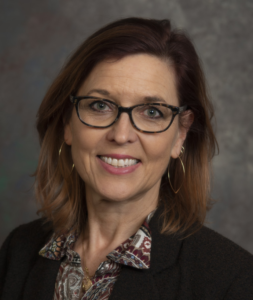 About the Presenter: Mary Schorse is an Assistant Research Professor in the University of Delaware’s Department of Geography and Spatial Sciences where she teaches foundational courses in human and cultural In addition to her teaching responsibilities, Mary is the Director of the Delaware Center for Geographic Education (DCGE), a departmental outreach center that partners with local and state organizations to support geography education and prepare K–12 educators to teach core geographic concepts. Mary also gets into the field to research issues connected to natural resource management policy, payment for ecosystem services (PES), and broader sustainability issues.
- 3:10 – 3:50 p.m. – Session 5: “Mapping Meaning: Student-Led Geospatial Stories in Environmental Literacy”
This session explores how student-centered geospatial projects can strengthen environmental literacy and geographic thinking. Participants will examine 2–3 student projects that use GIS, mapping, and spatial data analysis to explore local environmental issues. Projects include field data collection, spatial analysis, and digital storytelling to investigate topics such as watershed health, land use patterns, habitat connectivity, and environmental equity. Presenters will share how these projects are structured, scaffolded, and assessed, with an emphasis on inquiry, place-based learning, and student agency. Attendees will gain practical strategies for integrating geospatial tools into environmental and geography instruction without requiring extensive technical expertise. The session balances examples of student work with discussion of instructional design, making it relevant for educators working in traditional classrooms, specialty programs, or interdisciplinary settings. Participants will leave with concrete ideas for designing geospatial learning experiences that connect students to their local environment while building essential geographic skills.
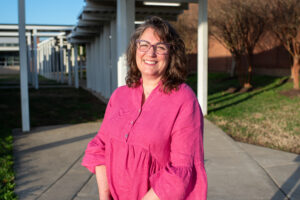 About the Presenter: Jill Rich is an educator and director of the Center for Environmental Studies and Sustainability at Varina High School in Henrico County, Virginia. With extensive experience in curriculum development, GIS instruction, and project-based learning, she leads innovative, sustainability-focused programs that connect students with real-world environmental challenges. She coordinates capstone projects, field experiences, and community partnerships, preparing students to apply geospatial thinking in meaningful and impactful ways.
- 4:05 – 4:45 p.m. – Session 6: “Everything is similar, everything is different: State GIS Clearinghouses as resources for education”
Most states have GIS clearinghouses to provide finding resources, metadata,downloadable datasets, and streaming services for public users. This presentation explores the missions of these efforts, the technology used to operate them, and opportunities for geographic education including: the geography of state GIS, governance between scales of government, standardization, and evaluating source data.
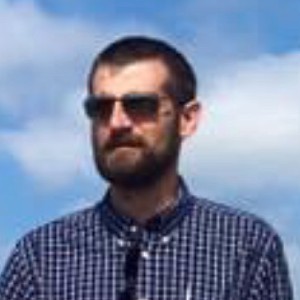 About the Presenter: Matt Gerike is Geospatial Program Manager for 9-1-1 GIS at the Virginia Geographic Information Network where he supports localities across the commonwealth. He has managed GIS offices and projects in local government, worked with state level GIS clearinghouses and data development projects, and taught at several colleges and universities. Matt is active in the Geospatial Professional Network (GPN), contributes to National Emergency Number Association (NENA) work groups relating to GIS, and volunteers with the Virginia Geographic Alliance.
- 5:00 – 5:40 p.m. – Session 7: “Esri hosted – Create geo apps with AI”
Discover how AI can help you quickly design and build interactive, map-based learning apps without coding experience. Participants will explore existing tools and then use basic techniques for creating engaging geography apps that bring spatial thinking to the classroom.
Presenter: Tom Baker, Esri
Conference Room
Halsey Family Hall