
Summary
This session highlights the findings of a national survey of teachers (n=404) in the United States. To explore classroom practices in geography, a survey was designed and distributed to teachers working in public and private schools. Findings reveal which tools are frequently used to teach geography. Findings also focus on key topics and skills that are widely taught and those that are not widely taught. In particular, map making by students is a relatively infrequent activity in classrooms. This session seeks to spark conversation around the implications of the survey results for K-12 geography curriculum, instruction, and professional development. The session closes with an appeal for a more coordinated effort to conduct larger surveys of teachers as a regular barometer of the field of geography education.
Session Focus
All Grade Levels | Geography for Life | Curriculum and Instruction
Conference Room
Cullen
Meet the Presenter
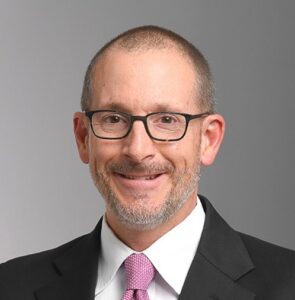 Todd Kenreich is a professor of secondary and middle school education at Towson University in Maryland, and he is the co-director of the Maryland Geographic Alliance. His interests chiefly lie in the areas of geography education and global citizenship education. With a range of international experiences, Kenreich seeks to prepare cosmopolitan teachers who can help their students more deeply understand the world and their community. At Towson, he directs Global Citizenship in Education, a graduate certificate program for teachers. In 2008, he was named a U.S. Fulbright Scholar in Japan. He has published articles in journals such as Theory and Research in Social Education, Journal of Geography, The Geography Teacher, and Social Studies Research and Practice. He edited Geography and Social Justice in the Classroom, a volume for the Routledge Research in Education book series.
 Ken Carano is a professor of social science education in the division of education and leadership at Western Oregon University and programs coordinator for the Center for
Geography Education in Oregon. Prior to joining higher education, he taught high school social studies in Sarasota, Florida and spent time living in Suriname, South America as a Peace Corps Volunteer with his wife. Ken’s scholarship has long focused on issues of diversity, equity, and inclusion on both a local and global scale.
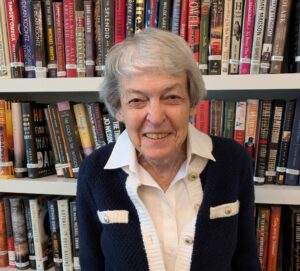 Cathy Cooper earned an M.A. in geography at The George Washington University, and then a Ph.D. in geography education from Texas State University. In 2009-2010, she served as a Grosvenor Scholar. For four years, she coordinated “Mapping Maryland,” an annual student map competition. Now she enjoys living in a retirement community in Easton, Maryland. The Eastern Shore provides many occasions and entertainments as well as enjoyable opportunities to practice “geographic exercises” around both physical and cultural lessons. She points out to friends the opportunities of being aware of “thinking geographically.” She enjoys reading articles in the NCGE journals as well as re reading around some favorite chapters of geographers’ books. She enjoys the study of geography and enjoys sharing observations whether near at hand or farther afield.
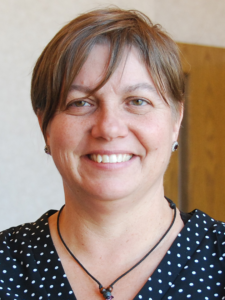 Tracy Edward is the sustainability coordinator at Frostburg State University where she taught geography for more than 20 years. She serves as a director on the board of the National Council for Geographic Education. She is active in the Mid-Atlantic Division of the American Association of Geographers as well as in the Maryland Geographic Alliance.
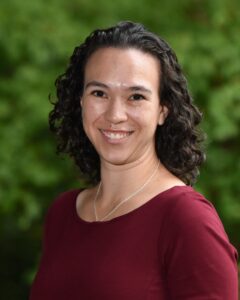
Allison Ewing is an experienced educator with 19 years of teaching in the classroom. She currently teaches AP Psychology, AP African American Studies, and United States History at Walter Johnson High School in Bethesda, Maryland. Throughout her career, she has demonstrated a strong commitment to academic excellence and student engagement across multiple disciplines. In addition to her classroom work, Ewing has served as the Coordinator for the Maryland Geographic Bee, supporting students in developing geographic literacy and critical thinking skills. Her dedication to teaching has been recognized with several prestigious honors, including the National Council for Geographic Education Distinguished Teacher K–12 Award in 2018 and the Chevron STEM Education Award in 2019. She is also a National Board Certified Teacher, reflecting her commitment to maintaining the highest standards of professional practice.
Ewing is passionate about creating meaningful learning experiences that empower students to think critically, engage with complex topics, and develop a deeper understanding of the world around them.
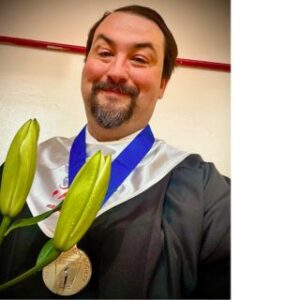 Daniel Whalen is an educational leader with a 22-year career dedicated to fostering student engagement and spatial literacy. Currently serving as an Assistant Principal in Las Vegas, New Mexico, his passion for geography is deeply rooted in his own diverse geographic upbringing—from the industrial heart of Pittsburgh to the close-knit, multi- generational farming villages of upstate New York. Holding a BA in History from SUNY Albany and an MA in Educational Leadership from The George Washington University, Daniel brings a profound understanding of how community, environment, and a "sense of place" shape student identity and achievement. Over his 18-year tenure with Prince George’s County Public Schools in Maryland, Daniel became a driving force in geographic and spatial science education. He spent a decade in the classroom teaching AP Human Geography and was instrumental in shaping the district's instructional framework, including co-authoring the AP Human Geography elective curriculum. Recognizing the critical importance of geospatial technologies, he later transitioned into Career and Technical Education (CTE). In this capacity, he pioneered pathways for students by developing and teaching comprehensive curricula for Homeland Security Science, Digital Cartography, and Advanced Geographic Information Systems (GIS). A dedicated advocate for geographic education at the national level, Daniel is thrilled to connect with fellow educators and leaders at the National Council for Geographic Education annual conference. He brings a wealth of assessment and mentorship experience to the geography community, having served as an AP Human Geography Reader since 2009 and a College Board Table Leader since 2023. As a Certified Geospatial Educator (GeoEdC) and a 2018-2019 American Geographic Society Fellow.
Daniel has consistently championed spatial education, supported by his leadership as Treasurer of the Maryland Geographic Alliance and his history of presenting on GIS integration at previous NCGE and Towson University conferences. Today, Daniel applies his geographer’s lens to school-wide administration, guiding educators to build innovative CTE pathways to graduation. In his administrative roles, he integrates character education and community-specific values into the curriculum—equipping students not just for the global workforce, but to lead and serve locally in Meadow City. Whether developing school-wide instructional strategies or serving as the energetic; voice celebrating student milestones, Daniel remains fiercely committed to elevating expectations, celebrating student success, and expanding access to high-quality geographic education.