
Summary
This strategy is especially powerful in Human and Cultural Geography because it mirrors the way geographers analyze patterns, relationships, and spatial organization. In human geography, students are constantly asked to categorize economic activities, compare demographic trends, evaluate political boundaries, and interpret cultural diffusion. “Sorts” make these abstract processes tangible.
When students physically group migration examples into push and pull factors, classify agricultural systems by level of development, or organize countries by demographic stage, they are practicing core geographic thinking skills: pattern recognition, scale analysis, regional comparison, and cause-and-effect reasoning. The discussion that emerges requires them to defend claims using evidence and precise vocabulary — reinforcing disciplinary literacy.
This strategy is especially powerful in Human and Cultural Geography because it mirrors the way geographers analyze patterns, relationships, and spatial organization. In human geography, students are constantly asked to categorize economic activities, compare demographic trends, evaluate political boundaries, and interpret cultural diffusion. “Sorts” make these abstract processes tangible.
By turning spatial analysis into a collaborative, tactile experience, “sorts” help students actively construct geographic understanding rather than passively receive it, strengthening both conceptual mastery and critical thinking.
Session Focus
Secondary/High School | Human and Cultural Geography | Assessment
Conference Room
Byrd
Meet the Presenters
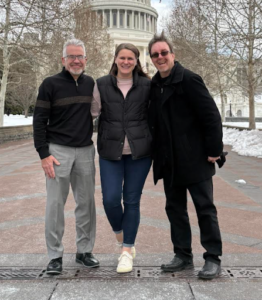 Jim Dzialo, Kolleen Madeck and Greg Sherwin have a combined 60 years of classroom experience across a multitude of disciplines, including Human Geography, Government, Economics, and Sociology. Beyond our own classrooms, we have a long-standing commitment to the profession, having designed and led professional development workshops focused on student-centered learning. Currently, we are dedicated to evolving our curriculum through the lens of Project-Based Learning (PBL) and inquiry, ensuring our students aren’t just learners, but active investigators of the world around them.