
Summary
Examining the Holocaust spatially positions students to think about genocide in new ways. In documenting the Holocaust following World War II, war crimes investigators from the state and the Jewish community asked eyewitnesses to create mental maps of Treblinka. For human geographers, mental mapping represents an opportunity to understand how people perceive a particular place, capturing objective knowledge and subjective perceptions and impressions of a place (National Geographic Society, 2024). In this session, participants will grapple with the question: How do we teach the Holocaust with accuracy while also teaching the subjectivity of mental maps? Using war crime investigation maps of Treblinka, we developed a lesson that requires students to (1) examine the topography surrounding Treblinka, (2) compare maps for content and visualization, (3) analyze how the depiction of Treblinka in Holocaust survivor memoirs compare to the maps, (4) assess how the perspective of the witness influenced the mental map, and (5) discuss the validity of the maps for use in postwar war crimes trials. Through this lesson, students understand how maps can be representations of both data and perceptions and the role spatial thinking can play in documenting atrocities and holding perpetrators accountable.
Session Focus
All Grade Levels| Human and Cultural Geography | World History
Conference Room
Lacy
Meet the Presenters
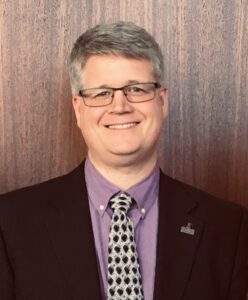 Jeff Eargle is a clinical associate professor at the University of South Carolina where he serves as the Secondary Social Studies Program Coordinator in the College of Education. He is the coeditor of the forthcoming two-volume book Teaching Holocaust Geographies in Middle and High School from Palgrave Macmillan
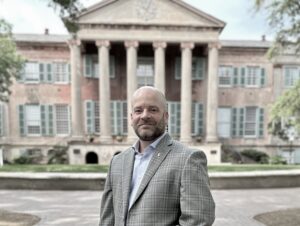 Chad Gibbs is an Assistant Professor and the Director of the Zucker/Goldberg Center for Holocaust Studies at the College of Charleston. His book, Survival at Treblinka: Geography, Gender, and Social Networks in Jewish Resistance, was recently published by the University of Wisconsin Press.
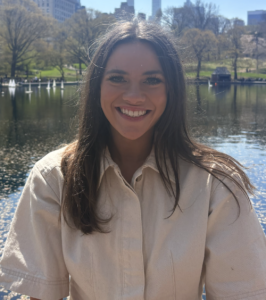 Bethany M. Sanders is a doctoral student in the College of Education at the University of South Carolina and a high school social studies teacher in the South Carolina public school system. She received NCGE’s K–12 Distinguished Teaching Award in 2024, and her doctoral studies focus on teaching geo-literacy in the secondary classroom.