
Summary
With the support of an NSF IUSE: ITYC collaborative planning grant, the presenters are looking to invigorate the teaching of undergraduate introductory geography courses, which define the discipline for thousands of undergraduates. They can also be the spark to draw students to major in geography and related fields. We wonder whether the standard survey approach for teaching introductory courses effectively recruits students to further study in geography or does justice to the discipline of geography, particularly newer branches of the field.
Our first step is to assemble a picture of the current landscape of undergraduate introductory geography courses. In collaboration with the American Association of Geographers, we are conducting a broad survey of our own of geography department heads, program directors, and instructors, regarding which courses are taught, the status of instructors who teach these courses, the format and types of materials for these courses, and enrollment data, among other elements. This poster will display our findings to date and invite NCGE attendees to contribute to the data, if they have not already, and to join a growing community of practice of undergraduate introductory geography instructors.
Session Focus
Higher Education | Geography for Life | Curriculum and Instruction
Conference Room/Area
Commonwealth Hall
Meet The Presenter
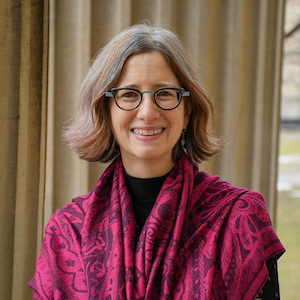 Dr. Tamar Y. Rothenberg is Professor in the Department of History at Bronx Community College – City University of New York, where she currently teaches World Regional Geography and History of the Modern World. Her publications include the book Presenting America’s World: Strategies of Innocence in National Geographic Magazine, 1888-1945 (Ashgate/Routledge 2007); an article with Karen M. Morin, “Our Theories, Ourselves: Hierarchies of Place and Status in Academia,” ACME 10(1), 2011; chapters in Geography and Empire, ed. Godlewska and Smith (Blackwell 1994) and Mapping Desire, ed. Bell and Valentine (Routledge 1995), and with Karen M. Morin and Mona Domosh, co-edited a special section on feminist historical geography for Historical Geography (2016). She has a BA in History from Wesleyan University, and MA and PhD in Geography from Rutgers University.
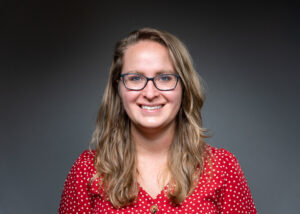 Cadey Korson is Professor of Geography at St Clair County Community College in Michigan and Fellow of Advance HE. Her research focuses on place-based pedagogies, Indigenous rights and digital storytelling/mapping. These interests have resulted in a variety of transdisciplinary projects, including The Spatial Awareness Project short film and podcast series on land use classifications in Aotearoa New Zealand, working with iwi to co-create digital storymaps that embed mātauranga Māori, exploring perceptions of social license to operate in the agrifood sector, and documenting the social impact of conservation volunteerism. Recently, Cadey has been awarded a grant from the National Geographic Society to coordinate a student-led streambank restoration project along the Belle River in Columbus County Park, USA, as a National Geographic Explorer.